
HTC Unveils VIVE Eagle AI Glasses, Taking Its Wearable Ambitions Beyond VR
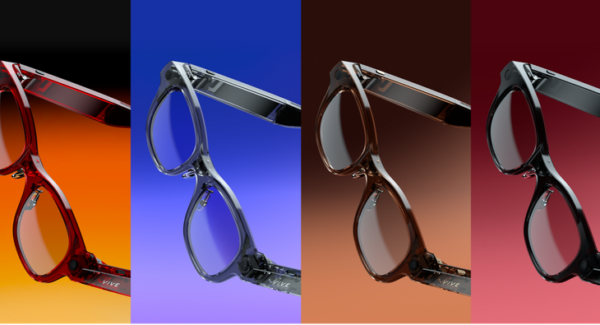
HTC is stepping into a category increasingly crowded by technology companies and eyewear brands. On August 14, the company announced VIVE Eagle, a pair of AI-powered smart glasses designed for everyday activities rather than the immersive worlds traditionally associated with its Vive headsets.
The glasses combine a camera, open-ear audio and an integrated voice assistant. They can take photos and videos, answer spoken questions and translate information captured by the camera. HTC is starting with a Taiwan launch, where preorders open today ahead of availability through selected retail and telecommunications partners.
For a company that helped establish consumer PC virtual reality, the announcement represents a change in emphasis. VIVE Eagle is not a smaller virtual reality headset. It aims to put useful features into eyewear that people could wear outside the home.
What VIVE Eagle actually does
The central interaction is voice. Wearers can call on HTC’s assistant with the “Hey VIVE” wake phrase, then ask questions without reaching for a phone. The glasses also support music playback and hands-free photography and video capture.
Photo translation is another advertised capability. Instead of pulling out a handset to translate a sign or a piece of printed text, a user can capture what they are looking at and ask the system for help. HTC is positioning the combination as a convenience tool for travel and daily errands.
The company has not presented VIVE Eagle as an augmented reality display system that places graphics in front of the wearer’s eyes. That distinction matters. Smart glasses with cameras, microphones and speakers occupy a different technological and commercial category from optical see-through AR displays.
Because there is no advertised in-lens visual interface, users should expect primarily spoken or audio-based feedback. An assistant that can understand a camera image does not automatically provide the kind of spatial overlays familiar from AR demonstrations.
Taiwan first, with local retail partnerships
HTC lists a price of NT$15,600 for VIVE Eagle in Taiwan. Preorders are scheduled from August 14 through August 31, with the initial launch beginning September 1. The glasses come in Berry, Coffee, Grey and Black color options.
The company is working with eyewear retailer 2020EYEhaus and Taiwan Mobile. This approach gives buyers opportunities for fitting, demonstrations and assistance through familiar local retail channels. Taiwan Mobile customers will also have access through designated service plans.
HTC says the first package includes sun lenses, a glasses case and two years of its VIVE AI Plus service at no additional charge. The company has not announced a comparable US price or a confirmed international release schedule today, so treating the Taiwan price as a worldwide retail commitment would be premature.
That narrow initial rollout may be a practical way to test the ownership experience. Smart glasses depend on more than electronics: frame fit, weight distribution, repairs, prescription considerations and customer support can all determine whether buyers continue using them.
Privacy is part of the pitch
Wearable cameras introduce an unavoidable concern: people nearby may not know when an interaction is being recorded. HTC is explicitly addressing this issue in the product announcement.
The company says recording is automatically disabled when the glasses are removed or when the LED recording indicator is covered. That is a product safeguard, not an assurance that every bystander will understand when filming is occurring. Clear social expectations will remain important wherever camera-equipped eyewear becomes commonplace.
The introduction also puts a spotlight on the data handled by voice assistants and photo translation. People may use these features around documents, workplaces and other sensitive environments. Product design will need to communicate what is captured and how that information is processed.
For now, HTC is describing privacy-conscious functionality rather than demonstrating how every possible scenario will be managed. Independent testing and practical use will be important once the glasses reach customers.
Why a VR pioneer is making AI eyewear
The HTC Vive name is strongly associated with virtual reality headsets, tracking systems and enterprise immersive computing. Smart glasses broaden that identity into a much larger potential market: people who want occasional digital assistance without entering a virtual environment.
This reflects a broader division in wearable computing. Fully immersive headsets offer rich visual experiences but require dedicated usage sessions. Audio-and-camera glasses sacrifice visual immersion to gain portability and a more conventional appearance.
Neither approach is necessarily a replacement for the other. A professional might use a VR headset for design reviews and lightweight glasses for messages or translation. A consumer who never wants a VR headset could still find hands-free recording useful.
Competition will be intense. Meta has already shown that fashion partnerships and retail distribution matter to camera-enabled glasses. HTC’s opening move combines its own hardware identity with a voice assistant and a concentrated local launch.
The next test is everyday usefulness
VIVE Eagle’s announcement is significant because it shows another established XR hardware company looking beyond immersive displays. But unveiling an attractive frame is easier than creating a product people remember to charge and wear every morning.
Battery performance, reliable speech recognition, photo quality and comfort will matter more than the category label. The Taiwan rollout will also reveal how customers respond to a service-backed AI experience sold through traditional eyewear outlets.
For HTC, the question is no longer simply how much immersion a device can provide. It is whether wearable computing can be useful even when the wearer has no intention of leaving the real world.
Related coverage on Virtual Reality Times
- Oakley Meta HSTN Brings AI Glasses Into Sports With 3K Video and Longer Battery Life
- Meta Unveils $799 Ray-Ban Display Glasses With Neural Wristband at Connect 2025
- HTC Demos Open Vive XR Elite, VIVERSE for Business and Other Solutions at MWC23
- The New HTC Headset is Vive XR Elite According to Trademark Filings
- HTC Vive’s Much-Teased “Small” VR Headset Leaked
Sources
https://virtualrealitytimes.com/2025/08/14/htc-unveils-vive-eagle-ai-glasses-taking-its-wearable-ambitions-beyond-vr/https://virtualrealitytimes.com/wp-content/uploads/2025/08/htc-vive-eagle-2025-08-14-600x325.pnghttps://virtualrealitytimes.com/wp-content/uploads/2025/08/htc-vive-eagle-2025-08-14-150x90.pngAR HeadsetsHardwareHTC ViveAI smart glasses,HTC Vive,HTC VIVE Eagle,smart glasses 2025,wearable AIHTC is stepping into a category increasingly crowded by technology companies and eyewear brands. On August 14, the company announced VIVE Eagle, a pair of AI-powered smart glasses designed for everyday activities rather than the immersive worlds traditionally associated with its Vive headsets. The glasses combine a camera, open-ear audio...Virtual Reality Times [email protected]SubscriberVirtual Reality Times
Leave a Reply