
Valve Discontinues Index VR Headset, Cuts Remaining Stock to $399.20
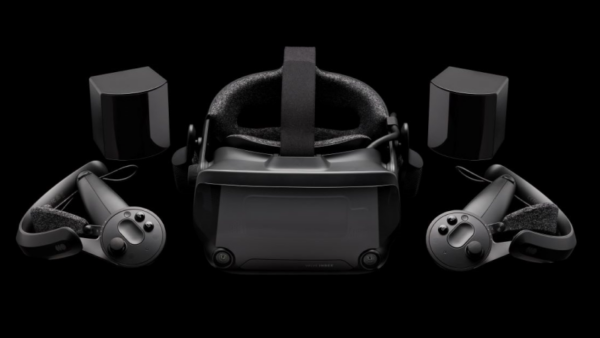
Valve is ending production of the Index, its premium PC virtual reality headset first released in 2019. The company now states that the headset is no longer being manufactured, while remaining hardware and replacement parts are being sold at a 20% discount.
The most eye-catching figure is $399.20 for the Index headset, down from $499. But this is not a complete VR setup for a first-time buyer. Index depends on external SteamVR tracking base stations and compatible tracked controllers, which are separate components. The discount may be more useful to existing owners than to newcomers trying to assemble a complete system.
The news, reported by Road to VR on October 14, comes a month after Valve revealed pricing and opened reservations for Steam Frame, a newer headset that combines standalone operation with wireless PC VR streaming. The transition marks the end of production for a device that helped define enthusiast PC VR for more than seven years.
The Index clearance prices
Valve’s store lists the headset at $399.20, a reduction of $99.80 from the previous $499 price. A replacement left controller has dropped from $149 to $119.20, while a replacement tether cable is now $103.20 instead of $129. The reductions apply while the relevant remaining stock is available.
The company’s official Index storefront says the headset is no longer being produced. That makes the sale different from a routine promotion: Valve is clearing out inventory rather than marking down a product that will be replenished in the normal way.
Availability also varies by region. According to Road to VR, Valve is listing only left replacement controllers for US customers, while some other regions may still have both sides. Supply may change as remaining parts sell out, and a low advertised price should not be mistaken for a guarantee that every component can be purchased together.
One particularly important missing item is the tracking base station. Valve is no longer selling its SteamVR 2.0 base stations directly, although HTC is listing compatible units for $229 each in the United States. Someone starting from scratch would need to account for those stations and controllers as well as the headset itself.
What happens to existing Index owners?
Valve says the discontinuation does not end software support for people who already own Index. The headset remains supported by Steam and SteamVR, so the production announcement should not be interpreted as a service shutdown.
That is a meaningful distinction. A social VR platform can become unusable when its central servers close. A PC VR headset is different: it connects to a computer, runs games through existing software and may continue to serve its owner after the manufacturer stops building new units.
Replacement parts are still an issue. Headset cables and controllers experience wear, especially for people who use VR frequently. The clearance makes some spares cheaper today but also signals that availability may become harder once remaining inventory is gone. Owners who depend on their Index for regular play will have to balance the value of buying spares against the possibility of eventually moving to different hardware.
There is no announced date in this news for SteamVR software support to end. It would be incorrect to suggest that Valve has provided one.
Why Index mattered to PC VR
When Index arrived in 2019, VR hardware still involved substantial compromises in image quality, tracking, comfort and interaction. Valve built Index for enthusiasts willing to pay more for a carefully integrated experience rather than the simplest or least expensive setup.
Its off-ear speakers were especially memorable. Instead of pressing headphones against the user’s ears, Index positioned speakers nearby, delivering detailed audio while leaving the ears physically unobstructed. The effect helped spatial sound feel natural and avoided some of the discomfort associated with conventional headset headphones.
The headset also offered high-refresh-rate display modes and manual adjustment features that appealed to technically demanding users. Its controllers, often called Knuckles, were designed to track individual finger movements and remain attached to the hands even when the player relaxed their grip.
Those strengths came with a practical drawback: the system relied on Lighthouse tracking base stations installed around a play area. That could provide precise tracking, but it added hardware, cables, setup time and expense. For a dedicated VR room, the trade-off was often acceptable. For casual users, it represented friction.
Index became a recognizable symbol of enthusiast PC VR not because every feature was perfect, but because Valve treated the headset as a high-performance system and pushed interaction, audio and tracking forward.
Steam Frame represents a different design philosophy
Steam Frame moves many of those decisions in another direction. It uses onboard cameras for inside-out tracking instead of requiring external base stations, and it can run compatible games locally while also streaming PC VR over a wireless connection.
Its September 14 pricing announcement put the 256GB model at $1,059 and the 1TB version at $1,299. Both include controllers and a dedicated PC streaming adapter. Valve also announced a standalone version of Half-Life: Alyx for Frame. Those details illustrate the shift from a tethered, externally tracked headset to a product intended to work in more situations.
The new approach is not automatically better in every respect. Some users will continue to prefer Lighthouse tracking, particular Index accessories or the feel of familiar hardware. And Frame’s premium pricing creates its own accessibility challenge. The comparison is better understood as a change in priorities than a simple upgrade on every specification.
Is a discounted Index worth buying?
For someone who already has base stations and controllers, a $399.20 replacement headset could be appealing, particularly if the existing hardware remains in good condition. For a new buyer without any SteamVR equipment, the total cost and declining availability of parts make the bargain considerably less straightforward.
Index also illustrates a broader truth about VR platforms: successful hardware can retain passionate users long after the industry changes direction. Its design influenced expectations for audio, controllers and immersive interaction, even as the market moved toward all-in-one headsets and inside-out tracking.
Valve’s production decision closes an important chapter, but it does not erase the games, mods and PC VR communities built around the headset. The Index is leaving the manufacturing line, not disappearing from SteamVR overnight. Its discounted final inventory is both a practical buying opportunity for some owners and a visible marker of how far the hardware landscape has shifted since 2019.
Related coverage on Virtual Reality Times
- Valve Prices Steam Frame at $1,059, Includes Standalone Half-Life: Alyx
- Valve’s Steam Frame Verified Standard Now Allows 72 FPS for Native VR Games
- Valve Index Replacement Parts to be Officially Sold via iFixit
- Valve Index is Back in Stock Across the Globe
- Valve Index to Ship in as Little as 2 weeks in Most Countries

Leave a Reply