
XREAL Reveals Project Aura, the First Optical See-Through Android XR Device
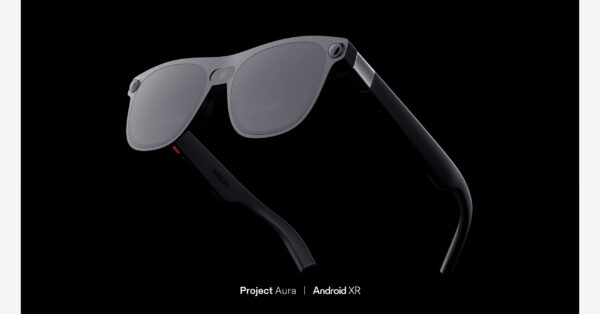
Google’s Android XR ecosystem is gaining a second announced hardware form factor. At Google I/O on May 20, XREAL introduced Project Aura, an optical see-through extended-reality device being developed in collaboration with Google.
Unlike a conventional immersive headset that replaces the view of the surrounding world with displays, optical see-through hardware allows the wearer to look through the optics at their environment while digital imagery is layered into view. XREAL says Aura is designed for Android XR, the software platform Google is building with partners including Samsung.
The announcement suggests that Android XR could support substantially different devices rather than trying to force every product into the same shape. It also puts XREAL in a prominent position as Google works to attract hardware makers and developers to a new spatial computing ecosystem.
Why optical see-through is different
Most consumer VR headsets use opaque displays. Mixed reality on those devices typically relies on exterior cameras that feed a reconstructed view of the world into the screens. That approach can create impressive digital overlays, but the user’s view of reality is still mediated by cameras and processing.
Optical see-through devices use a different principle. The wearer sees the physical environment directly through transparent optical elements, while generated imagery appears in that field of view.
There are advantages and trade-offs. Direct vision can feel more natural for certain activities, but digital images must contend with real-world brightness, optical limitations and the challenge of displaying opaque-looking virtual objects against visible surroundings.
Field of view, image brightness, tracking accuracy and weight become critical. A device that looks impressive in a controlled indoor demo may behave very differently outside in strong sunlight. Those factors cannot be judged fully from an announcement alone.
A tethered approach to computing
Google’s developer materials describe Project Aura as a portable, tethered device designed to provide access to familiar Android apps as well as XR-specific experiences. That matters because moving some processing and power demands away from the eyewear can reduce the burden on the user’s face.
The trade-off is less self-contained operation. A tether may make the system less convenient than glasses that contain everything needed for a task. It also creates product-design questions about the position, weight and battery needs of any companion computing unit.
Still, the approach may be sensible for applications that require richer visuals than current lightweight glasses can comfortably support. It offers another point on the spectrum between fully immersive headsets and everyday camera-and-audio smart glasses.
XREAL has not confirmed a final consumer price, complete feature list or mass-market release date for Aura. Today’s announcement should be read as a partnership and device roadmap, not as an immediately available retail product.
Google needs more than one headset
Android XR is an ambitious platform effort. Google wants developers to use familiar Android tools to build applications that can operate in three dimensions, while taking advantage of AI assistance and spatial input.
A single premium headset could demonstrate those capabilities, but a lasting ecosystem depends on more hardware choices and practical reasons for people to use them. Some customers may want a large immersive workspace. Others may prefer glasses for navigating information or viewing content while remaining aware of the physical world.
XREAL’s involvement helps Google demonstrate that partners are willing to develop beyond a single headset format. It also gives XREAL the potential benefits of a larger software platform instead of relying entirely on a proprietary set of apps and accessories.
Of course, ecosystem promises can be more difficult than hardware launches. Software written for a large virtual workspace may require substantial interface changes to be useful on glasses with a smaller viewing area. Developers will need tools to understand which features are supported on each device.
What developers are being offered
Google says Android XR’s development environment is expanding, including updated SDK tools and work on support for existing Android applications. Project Aura is described as a device that will initially provide an opportunity for developers to create and experiment.
For application makers, the practical questions concern input methods, spatial anchoring, performance and compatibility. They will also want confidence that the market can grow beyond a limited number of enthusiasts.
Cross-device support is particularly attractive for businesses considering training, visualization or productivity applications. Building for an operating system with several possible hardware partners could reduce dependence on one company’s headset roadmap.
The competitive significance
XREAL already operates in the market for wearable displays, and Aura moves the company toward a more integrated XR platform relationship. Google, meanwhile, faces competition from Apple, Meta and other companies that combine operating systems, developer tools and wearable hardware.
No single optical strategy is guaranteed to win. Some applications benefit from fully immersive screens, while others require awareness of real surroundings. Users will ultimately make decisions based on comfort, affordability and whether a device solves a daily problem.
Project Aura’s most important contribution today is proof of direction. Android XR is intended to grow into a family of devices, and Google’s alliance with XREAL gives that vision a concrete hardware project beyond its first immersive headset.
Related coverage on Virtual Reality Times
- Google Expands Android XR to AI Glasses With Gentle Monster and Warby Parker
- Google Adds PC Connect, Likeness Avatars and Travel Mode to Galaxy XR at Android XR Show
- Nreal Rebrands to to XREAL
- Nreal Air AR Glasses Launch in the US
- Nreal and Nio Unveil New Augmented Reality Headset
Sources
https://virtualrealitytimes.com/2025/05/20/xreal-reveals-project-aura-the-first-optical-see-through-android-xr-device/https://virtualrealitytimes.com/wp-content/uploads/2025/05/xreal-project-aura-2025-05-20-600x314.jpghttps://virtualrealitytimes.com/wp-content/uploads/2025/05/xreal-project-aura-2025-05-20-150x90.jpgAR HeadsetsGoogleNrealAndroid XR,AR glasses,Google I/O,spatial computing,XREAL Project AuraGoogle's Android XR ecosystem is gaining a second announced hardware form factor. At Google I/O on May 20, XREAL introduced Project Aura, an optical see-through extended-reality device being developed in collaboration with Google. Unlike a conventional immersive headset that replaces the view of the surrounding world with displays, optical see-through...Virtual Reality Times [email protected]SubscriberVirtual Reality Times
Leave a Reply