
visionOS 26.4 Brings Foveated Streaming to Vision Pro, Opening a Door for PC and Cloud VR
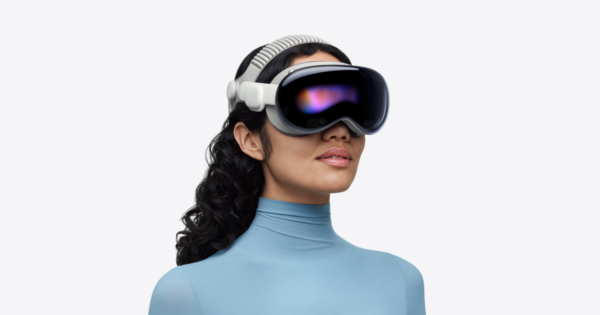
Apple released visionOS 26.4 on Tuesday, and for once the most interesting part of a point update is aimed squarely at VR enthusiasts. The release adds foveated streaming, a framework that lets developers send existing VR games and apps from a desktop PC or a cloud server to Apple Vision Pro, with the sharpest image placed wherever the wearer is looking.
Vision Pro has never had an official way to run PC VR content. Owners who wanted to play SteamVR titles or fly a full simulator rig have had to rely on community projects and workarounds. visionOS 26.4 does not change that overnight, because each app still has to adopt the new tools, but it gives developers a supported route for the first time.
The update is available now for every Vision Pro through Settings, General, Software Update, according to MacRumors’ release report. It is the fourth major update to visionOS 26, arriving roughly six weeks after visionOS 26.3.
What foveated streaming actually does
Wireless VR streaming always runs into the same wall. The headset has to decode a video stream, and its decoder can only handle so much resolution and bitrate. Spreading that budget evenly across the whole field of view wastes detail in areas the eye is not focused on.
Foveated streaming solves this by spending more of the bitrate on the small region where the user is looking and less on the periphery. Because human vision is only sharp in a narrow central area, the result should look clearer than a uniform stream at the same bandwidth.
It is related to, but separate from, foveated rendering. With foveated rendering, the host computer draws the gazed area at a higher resolution in the first place. Streaming and rendering can be combined, though a game has to support foveated rendering, or be modified to do so, for the second half of that equation to apply.
Apple’s approach is also notable for its stance on privacy. visionOS normally keeps raw eye tracking data away from apps. Under the new framework, coverage of the developer beta indicates that apps receive only an approximate region of the frame the user is looking at, rather than precise gaze coordinates.
Apple is not first to this idea. Valve built foveated streaming into its upcoming Steam Frame headset as a default feature for PC VR. What makes Apple’s version interesting is that it is not tied to a Mac. Any compatible host can in principle implement it, and Apple has pointed developers to Nvidia’s CloudXR SDK as one way to stream from a local or cloud PC.
The apps already lined up
Several developers have announced visionOS clients that use the framework, as 9to5Mac’s rundown of the release notes, while cautioning that the benefits depend on how quickly developers adopt it.
Flight simulator X-Plane 12 and the racing service iRacing are both preparing dedicated Vision Pro apps that connect to the simulation running on a user’s PC. Both are designed for people with physical cockpits, using passthrough so pilots and drivers can still see their yokes, wheels and pedals while inside the virtual cockpit.
On the professional side, Autodesk is bringing an immersive mode for VRED, its automotive visualization software, which streams high fidelity design models to the headset through CloudXR. Car makers already use VRED to review vehicle designs, and a streaming client means Vision Pro could slot into those reviews without the headset having to run the full scene on its own chip.
Developers can also layer native visionOS content on top of a streamed scene. One example described in 9to5Mac’s coverage is rendering a car’s instrument gauges locally on the headset while the rest of the cabin is streamed, which keeps small text crisp.
Other changes in visionOS 26.4
The rest of the update is smaller but useful. Spatial Audio now remembers the acoustic properties of rooms where the headset has been used before. Vision Pro already scans a space’s surfaces and materials to make sound behave realistically, and storing that information means the effect can start faster in familiar rooms without the user having to look around first.
Apple Podcasts gains better video support, letting listeners switch between the audio and video versions of an episode and download video episodes for offline viewing. visionOS 26.4 also adds eight new emoji that are arriving across Apple’s platforms, among them an orca, a trombone, a treasure chest and a ballet dancer. MacRumors also lists support for AirPods Max 2, along with the usual bug fixes and security updates.
Is Vision Pro becoming a PC VR headset?
Not yet, and possibly not in the way enthusiasts would like. Foveated streaming is a building block. There is no system-level SteamVR client, and Vision Pro still ships without motion controllers, which most PC VR games assume. Apple has added support for Sony’s PlayStation VR2 Sense controllers in earlier updates, but each streaming app has to decide how to handle input.
The early list of supported apps also says something about where Apple sees the value. Simulators and enterprise design tools are a comfortable fit for a $3,499 headset with very high resolution displays, and their users tend to own the powerful PCs the feature needs. Mainstream VR gaming is a less obvious target.
Still, the framework removes one of the biggest technical excuses for not bringing PC content to Apple’s headset. If more developers follow X-Plane, iRacing and Autodesk, Vision Pro owners could end up with a far broader library than the native visionOS App Store offers on its own, and Apple will have achieved that without building a single game itself.
visionOS 26.4 is a free update for all Vision Pro owners. Apple is expected to preview the next major version of the platform at its developer conference in June.
Related coverage on Virtual Reality Times
- Valve Puts Steam Link on Apple Vision Pro in Beta, but VR Games Will Have to Wait
- Apple Previews visionOS 27 With Siri AI and Personal Panorama Environments
- Controlling the Apple Vision Pro Headset With Eyes and Hands
- Apple to Open Several Vision Pro Developer Labs in Multiple Cities To Test Headset
- Apple Vision Pro Headset Details: Specs, Release Date, Price, and More
Sources
https://virtualrealitytimes.com/2026/03/24/visionos-26-4-brings-foveated-streaming-to-vision-pro-opening-a-door-for-pc-and-cloud-vr/https://virtualrealitytimes.com/wp-content/uploads/2026/06/vision-pro-price-2026-06-25-600x315.pnghttps://virtualrealitytimes.com/wp-content/uploads/2026/06/vision-pro-price-2026-06-25-150x90.pngAppleMixed RealitySoftwareApple Vision Pro,foveated streaming,Nvidia CloudXR,PC VR,visionOSApple released visionOS 26.4 on Tuesday, and for once the most interesting part of a point update is aimed squarely at VR enthusiasts. The release adds foveated streaming, a framework that lets developers send existing VR games and apps from a desktop PC or a cloud server to Apple...Virtual Reality Times [email protected]SubscriberVirtual Reality Times
Leave a Reply