
Valve’s Steam Frame Verified Standard Now Allows 72 FPS for Native VR Games
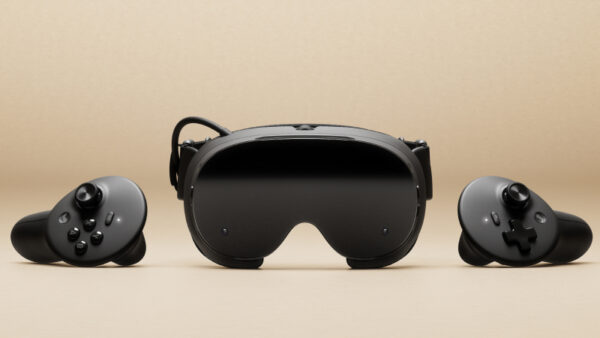
Valve has made an important change to the compatibility standard for its forthcoming Steam Frame headset: native virtual reality games can now qualify for Steam Frame Verified at 72 frames per second rather than the 90 fps target discussed earlier this year. The revision was made quietly and only attracted wider attention this week, with Road to VR reporting on it August 7.
The lower frame-rate figure does not tell the whole story. Valve’s updated criteria also specify a rendering resolution of at least 1,728 by 1,728 pixels per eye during ordinary play. It is better understood as a revised performance target than a simple decision to accept worse VR experiences.
For developers preparing games for Steam Frame, the new standard makes the certification goal clearer. For consumers, it explains what the Verified badge is supposed to communicate once the headset reaches market.
What changed from the original guidance?
At the Game Developers Conference earlier in 2026, Valve described a minimum 90 fps performance target for native VR titles seeking the Verified label. That was a demanding figure for standalone hardware running games without an external PC.
The currently published requirements lower the frame-rate threshold to 72 fps while specifying the per-eye resolution. Games that cannot reach 1,440 by 1,440 pixels per eye are expected to receive an Unsupported designation. Valve nevertheless says that Unsupported games may still be downloaded and played, leaving users free to decide whether the experience is acceptable.
The company also encourages developers to provide motion-vector and depth information that can improve reprojection. Those techniques can help a headset present motion at higher display refresh rates than an application renders every new frame.
Crucially, the change was not announced as a fresh policy this morning. VR.org drew attention to the existing wording earlier in the week, and Road to VR says Valve appears to have revised the figure months ago. The news is that the alteration has been newly noticed, not that Valve necessarily changed it on August 7.
Why frame rate is such a sensitive number in VR
Virtual reality is unusually demanding because images must respond quickly and consistently to head movement. Poor frame pacing can make virtual motion seem unstable and can contribute to discomfort. A flat game dropping a few frames and a headset failing to update the view smoothly are not equivalent experiences.
That is why certification targets matter. Players looking at a compatibility badge need a reasonable expectation that the software will work without unusually demanding troubleshooting or unacceptable performance compromises.
However, raw frame rate is only one variable. Resolution affects legibility and clarity, particularly for text and distant details. Tracking latency, image stability and the quality of reprojection also influence the result. A game that renders at a high frame rate but at very low resolution is not necessarily more pleasant than one with a lower but stable rate and clearer image.
Valve appears to be balancing those considerations by defining a combination of frame rate and minimum render resolution rather than treating 90 fps as the only important number.
Reprojection and eye tracking could help
Steam Frame includes eye tracking and uses a mobile-class processor, creating opportunities for rendering optimizations that would be familiar to modern standalone VR developers. Foveated rendering can concentrate detail where the user is looking while reducing work elsewhere in the image.
Reprojection addresses a different problem. By using information about movement and scene depth, software can help synthesize intermediate views when fully rendering a new frame would be too expensive. It is not free performance, and the results can vary by application, but it can make a headset’s display refresh feel smoother under certain conditions.
Encouraging developers to submit the relevant data suggests Valve wants its certification program to recognize those techniques rather than relying solely on traditional frame rendering.
A practical decision for the Steam library
Steam Frame is intended to run compatible titles locally as well as stream PC VR games. To succeed, it needs a credible catalog, including games that were originally developed for other standalone headsets.
A strict 90 fps rule could make that transition harder for developers with limited optimization budgets. A 72 fps threshold aligns more closely with performance targets already common in the standalone ecosystem, potentially easing ports without giving developers permission to abandon image quality altogether.
The Verified label also needs to be interpreted narrowly. It indicates that a title meets Valve’s stated requirements, not that every player will prefer its visual settings or that an Unsupported title cannot be enjoyed.
The eventual test will come when users compare the badges with real games on shipping hardware. For now, the change is a reminder that VR performance is a balancing act. Refresh rate matters enormously, but so do resolution, responsiveness and the software techniques that connect them.
Related coverage on Virtual Reality Times
- Valve Prices Steam Frame at $1,059, Includes Standalone Half-Life: Alyx
- Valve Discontinues Index VR Headset, Cuts Remaining Stock to $399.20
- Valve Job Listing Confirms a New Virtual Reality Headset
- Valve Patent Filing Shows It is Working on a New Wireless Headset
- Valve Index Replacement Parts to be Officially Sold via iFixit
Sources
https://virtualrealitytimes.com/2026/08/07/valves-steam-frame-verified-standard-now-allows-72-fps-for-native-vr-games/https://virtualrealitytimes.com/wp-content/uploads/2026/08/steam-frame-verified-2026-08-07-600x338.jpghttps://virtualrealitytimes.com/wp-content/uploads/2026/08/steam-frame-verified-2026-08-07-150x90.jpgGamingHTC-ValveVR HeadsetsSteam Frame Verified,SteamVR,Valve Steam Frame,VR frame rate,VR performanceValve has made an important change to the compatibility standard for its forthcoming Steam Frame headset: native virtual reality games can now qualify for Steam Frame Verified at 72 frames per second rather than the 90 fps target discussed earlier this year. The revision was made quietly and only...Virtual Reality Times [email protected]SubscriberVirtual Reality Times
Leave a Reply