
Snap Plans Consumer Launch of Lightweight Specs AR Glasses in 2026
Snap is making a significant commitment to consumer augmented reality. Speaking at the Augmented World Expo on June 10, chief executive Evan Spiegel announced that the company plans to launch a lighter generation of Specs AR glasses for the public in 2026.
The planned product represents a new step for a company that has spent years experimenting with camera eyewear and increasingly sophisticated AR developer devices. Snap says Specs will offer see-through lenses and use advanced machine learning to help digital content respond to the physical world.
The announcement does not include a final retail price, detailed consumer specification sheet or exact launch date. Those missing details matter, but the strategic signal is clear: Snap believes its glasses technology is approaching a point where it can move beyond a relatively narrow developer audience.
From developer hardware to an everyday product
Snap’s recent Spectacles have demonstrated ambitious AR experiences, but they have also been visibly experimental devices. Large frames, battery constraints and limited software catalogs make sense in hardware intended to help developers explore new possibilities; those same compromises are harder to accept in something people are supposed to wear casually.
The company says its upcoming Specs will be lighter and designed for a broader audience. That is more than an aesthetic preference. Weight, appearance and comfort determine whether glasses become a regular part of daily life or remain a gadget used occasionally at home.
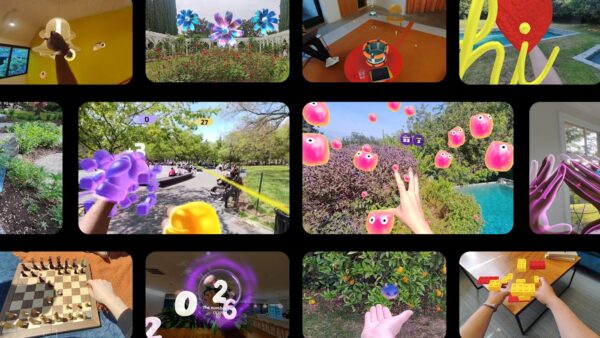
Snap’s announcement describes capabilities including shared AR experiences, contextual AI assistance, browsing, streaming and spatial workspaces. These are the company’s intended use cases, not independent proof that each will be compelling in a finished retail product.
The challenge is turning them into interactions that are easy to understand. A headset can be bulky because the user expects a dedicated session. A pair of glasses must offer value quickly enough to justify putting it on throughout ordinary activities.
The promise of shared augmented reality
Snap’s history with Snapchat Lenses gives it unusual expertise in playful camera-based effects. Moving from a phone screen to see-through glasses changes the basic relationship between those effects and the real world.
A phone creates a framed AR experience: the user looks through the display at an augmented scene. Glasses could place information or interactive elements directly into the user’s field of view. Shared experiences could allow two wearers to see content related to the same physical location.
To work convincingly, however, that experience needs accurate tracking, consistent spatial mapping and effective synchronization between users. If a virtual object moves or drifts relative to the environment, the shared illusion weakens.
Social AR also has the familiar problem of network effects. A multiplayer game is less useful when few friends have compatible devices. Snap’s existing user relationships could help, but widespread adoption of new glasses cannot be assumed from the popularity of its mobile app.
AI creates both opportunity and responsibility
Snap is explicitly linking Specs to the rapid development of AI. An assistant that understands a scene could potentially provide useful guidance without making someone reach for a phone. That capability might differentiate AR glasses from simpler wearable displays.
But scene understanding depends on sensing the physical world. Cameras, microphones and environmental mapping raise questions about bystanders, data processing and user control. Consumer acceptance will depend partly on how transparently the glasses communicate what they are doing.
There are also practical engineering limits. Continuous computer vision and spatial rendering demand processing power, which creates heat and battery challenges in a small wearable device.
The company has not provided enough final specifications to compare endurance, image quality and comfort meaningfully with future rival products.
Eleven years of experimentation
Snap says it has spent more than $3 billion over 11 years developing its AR computing vision. That statement gives a sense of the persistence required to move from novelty camera eyewear toward a more ambitious platform.
Research spending alone is not evidence of product-market fit. Many technologies can be demonstrated before they become economical and convenient enough for everyday consumers. Snap will need to show not only that its glasses can create impressive digital overlays, but that they do so at a price and level of reliability people accept.
The wider market is becoming more competitive, with major technology companies investigating everything from camera-and-audio eyewear to richer display-based systems. Snap’s distinct advantage may be its creative community and experience with consumer AR effects.
What to watch before the launch
The most important unanswered questions concern price, weight, battery life, field of view, prescription compatibility and developer support. Availability by region and the strength of the initial application library will matter as well.
For now, Specs are a 2026 product promise, not something shoppers can order today. The announcement is nevertheless consequential because Snap is putting a public timetable on its effort to turn AR glasses into a consumer computing platform.
The next year will test whether Snap can translate its long-running AR experiments into eyewear people actually want to wear.
Related coverage on Virtual Reality Times
- Google Expands Android XR to AI Glasses With Gentle Monster and Warby Parker
- XREAL Reveals Project Aura, the First Optical See-Through Android XR Device
- Snapchat Now Supporting Multiplayer AR Games
- Snapchat Launches DIY AR Web Ad Builder
- Latest Snapchat Filters Transform the Floor into Lava
Sources
https://virtualrealitytimes.com/2025/06/10/snap-plans-consumer-launch-of-lightweight-specs-ar-glasses-in-2026/https://virtualrealitytimes.com/wp-content/uploads/2025/06/snap-specs-2025-06-10-600x338.jpghttps://virtualrealitytimes.com/wp-content/uploads/2025/06/snap-specs-2025-06-10-150x90.jpgAR HeadsetsAugmented RealityBusinessaugmented reality glasses,AWE 2025,Snap Specs,Snapchat,spatial computingSnap is making a significant commitment to consumer augmented reality. Speaking at the Augmented World Expo on June 10, chief executive Evan Spiegel announced that the company plans to launch a lighter generation of Specs AR glasses for the public in 2026. The planned product represents a new step for...Virtual Reality Times [email protected]SubscriberVirtual Reality Times
Leave a Reply