
Niantic Sells Pokémon GO Business for $3.5 Billion and Refocuses on Spatial AI
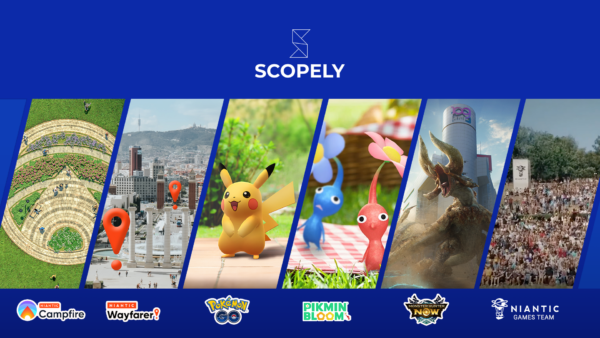
The company behind the most recognizable augmented-reality mobile game is separating its game business from its spatial technology ambitions. Scopely announced March 12 that it has agreed to acquire Niantic‘s games business for $3.5 billion, taking control of titles including Pokémon GO, Pikmin Bloom and Monster Hunter Now.
Niantic, meanwhile, plans to concentrate on technology for understanding and mapping the physical world through a new company called Niantic Spatial, led by founder and chief executive John Hanke. Niantic said it would contribute an additional $350 million in cash, bringing the stated value distributed to Niantic equity holders to about $3.85 billion.
It is one of the clearest strategic dividing lines yet in consumer AR. The business built around getting people to explore their neighborhoods is moving under a major game operator, while the technology associated with interpreting real places becomes its own enterprise.
Pokémon GO moves into a larger gaming portfolio
Pokémon GO turned location-based play into a global phenomenon by encouraging people to walk, visit landmarks and encounter digital creatures through their phones. Its most important innovation was not convincing visual immersion alone. It linked an extremely familiar game franchise to real geography and gave people a reason to return to locations repeatedly.
Scopely’s acquisition includes other location-based titles as well as the Niantic game teams. Scopely says the acquired games business serves more than 30 million monthly active players and generated more than $1 billion in 2024 revenue. The buyer says it intends to preserve the leadership of the game teams and continue their roadmaps.
That language will matter to players who worry that an ownership change could alter how their favorite games work. Continued service and promised continuity are positive signals, but future decisions about events, monetization and community features will belong to the new organization.
The transaction is an announced agreement, not a reason to assume that every operational change has already taken effect. Its completion and integration are separate steps.
Niantic wants to build the underlying map
The other side of the announcement may ultimately be more important to the broader XR industry. Niantic Spatial will focus on building technologies that can understand locations, reconstruct real environments and anchor digital information to the physical world.
A useful augmented-reality system needs more than a camera and a screen. To place a digital object reliably, software must estimate where the user is, what surfaces exist, and how a scene changes as someone walks around. Outdoor applications add challenges involving GPS uncertainty, inconsistent lighting, moving people and similar-looking streets.
Niantic has spent years pursuing location mapping and visual positioning techniques through its game ecosystem and development tools. Moving those technologies into a dedicated company reflects the possibility that they have value well beyond Pokémon GO.
Potential customers might include robotics developers, mapping businesses, navigation services or future makers of wearable displays. The new company has not demonstrated a universal solution to those industries’ problems, however. Each use case imposes different accuracy, privacy and reliability requirements.
What the sale says about consumer AR
The original promise of Pokémon GO often appeared to be that an enormous mobile audience would naturally become an enormous AR audience. In practice, many players enjoyed the location-based mechanics without treating camera-based overlays as the central reason to play.
That does not diminish the game’s significance. It illustrates the difference between creating an enjoyable product that uses location and creating a broadly adopted computing platform that continually understands the physical world.
By splitting the businesses, Niantic is acknowledging those are distinct commercial tasks. Game teams need engaging content, licensing, events and retention. Spatial technology teams need reliable developer products, mapping capability and customers with applications outside entertainment.
The distinction could prove useful as headset and glasses manufacturers search for more convincing real-world applications. Navigation assistance, situated information and shared digital objects all rely on some understanding of physical space. But technical capability alone will not make people comfortable wearing cameras or sharing environmental data.
Important questions remain
Players will want reassurance about accounts, events and the future of their communities. Developers will want clarity about access to Niantic’s spatial technologies, pricing and support. Investors will judge whether the two businesses operate better when their priorities are separated.
The agreement does not prove that Niantic is abandoning augmented reality. On the contrary, its newly stated strategy places spatial technology at the center of the remaining company. What is changing is the business model through which that technology is developed and sold.
For the XR industry, the takeaway is substantial. One of AR’s most successful consumer stories is being divided into two companies because building an enduring game and building the infrastructure for spatial computing are not quite the same mission.
Related coverage on Virtual Reality Times
- Google Expands Android XR to AI Glasses With Gentle Monster and Warby Parker
- Snap Plans Consumer Launch of Lightweight Specs AR Glasses in 2026
- Niantic Announces an Augmented Reality Headset in Partnership with Qualcomm
- Niantic Visual Positioning System Transforms Your World into an AR Game
- Niantic Partners With NBA for an AR Basketball Game
Sources
https://virtualrealitytimes.com/2025/03/12/niantic-sells-pokemon-go-business-for-3-5-billion-and-refocuses-on-spatial-ai/https://virtualrealitytimes.com/wp-content/uploads/2025/03/niantic-2025-03-12-600x338.pnghttps://virtualrealitytimes.com/wp-content/uploads/2025/03/niantic-2025-03-12-150x90.pngAcquistionsAugmented RealityBusinessaugmented reality,Niantic,Pokémon GO,Scopely,spatial AIThe company behind the most recognizable augmented-reality mobile game is separating its game business from its spatial technology ambitions. Scopely announced March 12 that it has agreed to acquire Niantic's games business for $3.5 billion, taking control of titles including Pokémon GO, Pikmin Bloom and Monster Hunter Now. Niantic, meanwhile,...Virtual Reality Times [email protected]SubscriberVirtual Reality Times
Leave a Reply