
Google Expands Android XR to AI Glasses With Gentle Monster and Warby Parker
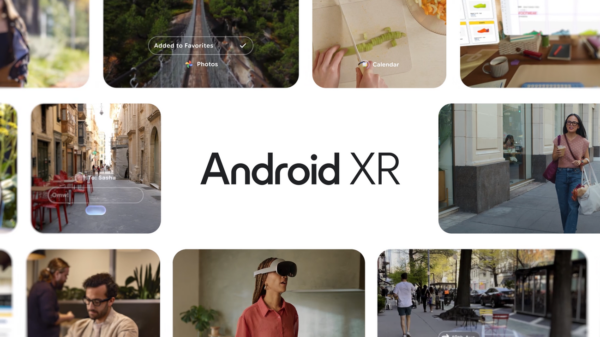
Google used Google I/O 2025 on May 20 to broaden its Android XR ambitions beyond headsets. The company demonstrated how its Gemini AI assistant could operate through lightweight smart glasses and announced eyewear partnerships with Gentle Monster and Warby Parker.
The development positions Android XR as a platform for multiple forms of wearable computing, from fully immersive headsets to glasses intended for everyday use. Google is working with Samsung on the underlying ecosystem while developing approaches that could make AI assistance available through voice, cameras and contextual information.
Importantly, today’s announcements are a view of Google’s intended direction rather than the launch of a consumer product with a confirmed price and shipping date. The distinction matters in a category where impressive demonstrations often arrive well before mass-market devices.
Gemini moves into the user’s surroundings
Google’s concept shows an assistant that can respond to questions about what a person is seeing and help with tasks without requiring repeated phone interactions. Demonstrations and described use cases include asking for information, handling messages, navigation and capturing moments through the glasses.
The appeal is contextual assistance. A smartphone can answer a question after someone opens an app and types a request. Wearable glasses could eventually remove some of that friction by allowing the user to speak naturally while an assistant accesses relevant visual context.
But there are significant design questions. A useful assistant must understand which parts of a scene matter, handle ambiguous commands and avoid distracting the wearer. The system also has to respond quickly enough that users do not feel they are interrupting ordinary activities to wait for an answer.
AI software can make a wearable more capable, but it cannot make an uncomfortable or unreliable pair of glasses desirable. Battery life, privacy signals, noise levels and the social acceptability of cameras are likely to be as important as the model behind the assistant.
Why eyewear companies matter
Google’s partnerships with Gentle Monster and Warby Parker recognize an uncomfortable truth for technology companies: people choose glasses partly because they like how the frames look and feel.
Conventional XR hardware often prioritizes capability over fashion, producing large devices that are acceptable for a gaming session or a workplace demonstration but unrealistic for daily wear. Eyewear brands understand fitting, comfort, style and the retail expectations of people who already wear prescription glasses.
A successful partnership could help combine that experience with Google’s software and hardware ecosystem. The companies have not yet provided complete consumer designs, model lineups, prices or launch dates. It would therefore be inaccurate to describe a particular frame as already available merely because its partner has been named.
Google also identified future collaboration opportunities with additional eyewear companies, indicating that it wants a broader hardware ecosystem rather than a single exclusive product.
Android XR becomes a platform strategy
Google’s work with Samsung has already established an ambition to bring Android applications into immersive environments. Extending the platform to glasses could make developer investment more reusable across devices with different display and interaction capabilities.
The same software will not necessarily run identically on every form factor. A full headset can place large windows and objects around a user’s room. Lightweight glasses might offer audio assistance, a narrow visual display or limited overlays. Applications need interfaces adapted to what the device can comfortably show.
Google says developers will receive further opportunities to work with the glasses platform. That makes developer tooling, common APIs and access to services central to the strategy. A hardware category becomes more valuable when outside companies can build useful applications rather than relying entirely on the manufacturer.
A competitive market with no settled winner
Meta has already found consumer interest in camera-and-audio smart glasses, while other manufacturers are exploring displays and more ambitious spatial interfaces. Google’s advantage could be the reach of Android and its AI ecosystem; its challenge is turning those capabilities into hardware people enjoy using.
There is also a privacy balancing act. Context-aware glasses may need access to cameras, location or microphones to provide their most impressive features. Products will need understandable controls and clear ways to communicate when sensing is active.
Google says it is gathering feedback on prototypes with trusted testers. That is a reminder of how early some of the experience design still is.
What to watch next
The announcements create a roadmap rather than a finished consumer offer. Developers will want to know which APIs are available and how applications move between headsets and glasses. Buyers will ask how long batteries last, whether prescription options are supported and what tasks the glasses perform without a phone.
If Google can bring those pieces together, Android XR could become a meaningful platform for AI eyewear as well as immersive headsets. For now, the most important shift is strategic: Google is treating everyday glasses not as an accessory to XR, but as one of the platform’s possible destinations.
Related coverage on Virtual Reality Times
- XREAL Reveals Project Aura, the First Optical See-Through Android XR Device
- Google Adds PC Connect, Likeness Avatars and Travel Mode to Galaxy XR at Android XR Show
- Google Earth’s Maps Now Accessible to Developers
- Google’s Geospatial Creator Transforms the World into an Augmented Reality Stage
- Google Hints Samsung’s AR/VR Headset Could Be Revealed ‘Later This Year’
Sources
https://virtualrealitytimes.com/2025/05/20/google-expands-android-xr-to-ai-glasses-with-gentle-monster-and-warby-parker/https://virtualrealitytimes.com/wp-content/uploads/2025/05/android-xr-2025-05-20-600x337.pnghttps://virtualrealitytimes.com/wp-content/uploads/2025/05/android-xr-2025-05-20-150x90.pngAR HeadsetsAugmented RealityGoogleAndroid XR,Gemini,Google I/O 2025,smart glasses,Warby ParkerGoogle used Google I/O 2025 on May 20 to broaden its Android XR ambitions beyond headsets. The company demonstrated how its Gemini AI assistant could operate through lightweight smart glasses and announced eyewear partnerships with Gentle Monster and Warby Parker. The development positions Android XR as a platform for multiple...Virtual Reality Times [email protected]SubscriberVirtual Reality Times
Leave a Reply