
Valve Reveals Steam Frame VR Headset for 2026 With Standalone Gaming and PC Streaming
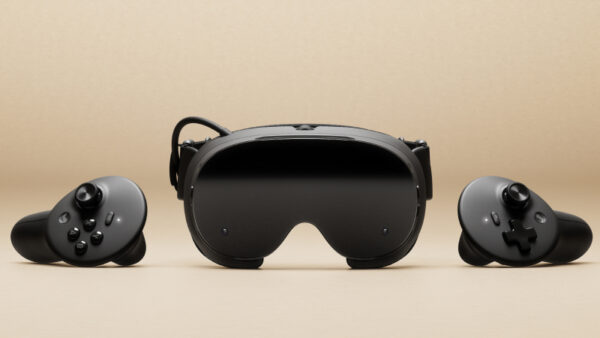
Valve is returning to VR hardware with Steam Frame, a newly announced headset designed to run games independently and stream others from a PC. Revealed on November 12, the device is planned to begin shipping in early 2026, alongside a new Steam Machine and Steam Controller.
Steam Frame marks Valve’s first major headset announcement since the Valve Index, introduced in 2019. The new approach is different: rather than requiring external tracking equipment and a connected gaming PC for every session, Steam Frame is being designed around portable use, onboard computing and wireless access to the Steam library.
Valve has not announced a retail price today. That is a major outstanding detail, and any specific price circulating now should be treated as speculation rather than a confirmed purchasing option.
A headset built around the Steam library
Valve’s announcement emphasizes two modes of use. Some games will run standalone on the device’s internal hardware, while others can be streamed wirelessly from a compatible computer.
This distinction is central to the product. High-end PC VR games may demand graphics performance beyond what a compact headset can deliver on its own. Streaming allows a powerful computer to do the difficult rendering work while the headset displays the resulting image and handles tracking.
Native operation, meanwhile, can make the headset more convenient when a gaming PC is unavailable. It also supports the idea that Steam Frame is not merely a peripheral but an independent computing device.
Valve is promoting use with both VR and non-VR games, extending the potential audience beyond players who already own a large immersive-game library. Flat-screen titles can be experienced on a virtual display without needing each game to be redesigned for motion controls.
What Valve has revealed about the technology
Valve’s published specifications describe a headset built around a Snapdragon 8 Gen 3 processor with 16GB of memory, pancake lenses and LCD displays.
The device includes inside-out tracking, meaning it can estimate its position using onboard sensors and cameras instead of relying on Valve Index-style external base stations. It also has eye-tracking cameras for features including foveated streaming, an approach intended to prioritize image quality where the player is looking.
An included wireless adapter is designed to create a direct low-latency connection between the headset and a PC. This is important because wireless performance can strongly affect how smooth and responsive a streamed game feels.
None of these elements guarantees that every existing SteamVR title will run natively on the headset. Games designed for conventional PC processors and graphics hardware may still need a PC connection, compatibility work or different software builds.
Steam Frame Verified is coming
Valve says it is extending its Verified program to Steam Frame and the new Steam Machine. The aim is to help players understand which games work well on which hardware.
For Steam Frame, that distinction is particularly useful. A game may perform well when streamed from a desktop computer but struggle to run locally on the headset’s ARM-based processor. A clear compatibility label could reduce confusion at the point of purchase.
Valve has opened a developer-kit request program through Steamworks. Kits will be distributed in limited quantities, giving developers time to test performance, interface behavior and standalone compatibility before the planned shipping window.
The company is also trying to minimize extra work for developers, though there will still be technical challenges for games that depend heavily on specific PC hardware or conventional mouse-and-keyboard interfaces.
A very different position from Valve Index
Valve Index became associated with enthusiast PC VR, precise tracking and high-quality controllers. That design served people willing to dedicate a room and a powerful computer to immersive gaming.
Steam Frame looks aimed at a broader mix of use cases. Inside-out tracking reduces equipment requirements; onboard processing makes travel and casual use more practical; and wireless streaming connects the product to Valve’s existing PC-gaming strengths.
It is not yet possible to say whether Steam Frame will outperform Index in every application. Tracking preferences, optical quality, comfort, software support and price will all influence that comparison.
The shift also signals that Valve sees value in removing setup friction. Players may be more willing to use VR regularly when putting on a headset does not require preparing an entire room or managing cables.
Why the announcement matters for PC VR
The PC VR market has long depended on a combination of dedicated headsets, general-purpose hardware and distribution through Steam. A new first-party headset from the platform owner could make that ecosystem more coherent.
At the same time, Valve will enter a market where Meta already offers standalone VR and where other companies compete on display quality, comfort and mixed-reality features. Steam Frame’s strongest potential advantage is likely to be the relationship with the existing Steam library rather than a single spectacular specification.
The company has also introduced a wider new hardware family, including Steam Machine and Steam Controller. That ecosystem approach could make streaming and cross-device play more central to how customers think about Steam.
The unanswered questions
Price, final launch timing and real-world performance remain unresolved. Buyers also need to learn how reliably wireless streaming works in busy home networks, how much battery life standalone games provide and which Steam titles earn compatibility badges.
Valve’s November announcement is nevertheless one of the year’s most consequential pieces of VR hardware news. Steam Frame is real, its development strategy is clear, and developers can begin preparing for it. The next step is proving that the combination of standalone convenience and PC gaming breadth works as well in living rooms as it does in the company’s presentation.
Related coverage on Virtual Reality Times
- Bigscreen Beyond 2 Debuts at 107 Grams With Wider Optics and Optional Eye Tracking
- Samsung Launches $1,799 Galaxy XR, the First Headset Built on Android XR
- Valve Job Listing Confirms a New Virtual Reality Headset
- Valve Patent Filing Shows It is Working on a New Wireless Headset
- Valve Index Replacement Parts to be Officially Sold via iFixit
Sources
https://virtualrealitytimes.com/2025/11/12/valve-reveals-steam-frame-vr-headset-for-2026-with-standalone-gaming-and-pc-streaming/https://virtualrealitytimes.com/wp-content/uploads/2026/08/steam-frame-verified-2026-08-07-600x338.jpghttps://virtualrealitytimes.com/wp-content/uploads/2026/08/steam-frame-verified-2026-08-07-150x90.jpgHardwareValveVR HeadsetsPC VR streaming,Steam Frame VR headset,Steam hardware 2025,Valve Index successor,Valve Steam FrameValve is returning to VR hardware with Steam Frame, a newly announced headset designed to run games independently and stream others from a PC. Revealed on November 12, the device is planned to begin shipping in early 2026, alongside a new Steam Machine and Steam Controller. Steam Frame marks Valve's...Virtual Reality Times [email protected]SubscriberVirtual Reality Times
Leave a Reply