
ROG XREAL R1 Gaming Glasses Open for Preorder at $849.99 With 240Hz Micro-OLED Displays
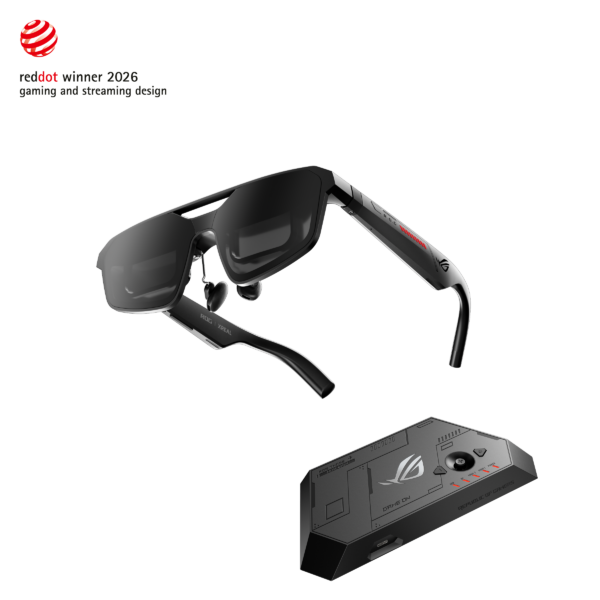
Asus’s Republic of Gamers brand and XREAL are now taking orders for the ROG XREAL R1, a pair of display glasses built specifically for gaming. Preorders opened in the United States on Friday, May 15, through Best Buy at $849.99, with XREAL’s own online store expected to start taking global orders on May 17.
First shown at CES in January, the R1 is the most prominent attempt yet by a major PC gaming brand to sell wearable displays as a gaming monitor replacement. It is aimed at people who want a large, private screen for a console, gaming PC or handheld, rather than at mixed reality or spatial computing.
Price and availability
The $849.99 price applies to the US Best Buy listing, the launch retailer named by ASUS ROG North America. Some outlets have rounded it to $850. That puts the R1 well above XREAL’s own flagship consumer glasses: Road to VR notes that the XREAL One Pro sells for about $600.
According to Road to VR, Best Buy was quoting delivery or in-store pickup from May 29 at launch, while worldwide shipping is slated to begin on June 1. Regional pricing outside the US had not been widely published at the time of writing.
The specs
The core of the R1 is a pair of Sony 0.55-inch micro-OLED panels, each running at 1920 by 1080. The headline number is the refresh rate: up to 240Hz, which Road to VR points out is double the refresh rate of the One Pro. For fast competitive games on PC, that is the figure ROG is leaning on.
The glasses use birdbath optics with a 57-degree field of view. On its official R1 product page, ROG describes the result as a virtual display equivalent to a 171-inch screen. Other listed specifications include peak brightness of 700 nits, 3 milliseconds of motion-to-photon latency and coverage of 107 percent of the sRGB color space, according to Road to VR.
The R1 weighs 91 grams. It has electrochromic lenses that can be dimmed to three levels, digital adjustment for the distance between the eyes, and built-in speakers tuned by Bose.
Tracking is limited out of the box. The glasses support three degrees of freedom, meaning the image can stay anchored in place as you turn your head, but they do not track movement through space on their own. Full six degrees of freedom tracking requires XREAL’s optional Eye camera accessory, which costs about $100.
The dock and console support
What sets the R1 apart from most display glasses is the hardware in the box. Each unit ships with an ROG Control Dock, a small hub designed to make the glasses work with devices that do not output video over USB-C.
The dock has two HDMI 2.0 inputs and one DisplayPort 1.4 input, plus a USB-C output to the glasses, and handles video at up to 4K and 60Hz. That means a PlayStation, Xbox or desktop PC can be plugged in directly, and users can switch between sources without recabling. Road to VR lists the dock at 215 by 100 by 25 millimeters and 230 grams, so it is meant to sit on a desk or TV stand rather than travel in a pocket.
Without the dock, the R1 works like other XREAL glasses: it plugs straight into handheld gaming PCs, phones and laptops that support video output over USB-C. That covers devices such as the ROG Ally line, which is an obvious pairing for Asus.
There are trade-offs worth noting. The dock’s listed video spec is 4K at 60Hz, and the companies have not spelled out which sources and connections deliver the full 240Hz mode. None of the performance claims have yet been tested by independent reviewers. Manufacturers’ brightness and latency figures often look different in daily use.
Where it fits in the glasses market
Display glasses like the R1 sit in a different category from headsets such as Meta Quest 3 or Apple Vision Pro. They do not run apps on their own and are not designed for immersive VR. Instead they act as a wearable external monitor, which has made them popular with travelers, commuters and handheld gamers.
XREAL has been the best known name in this space for several years, and it is also preparing Project Aura, a more capable pair of glasses built for Google’s Android XR platform. The R1 takes a narrower path, focusing on display quality and gaming inputs rather than apps or AI features.
For Asus, the partnership gives ROG a wearable product to sit alongside its gaming laptops, monitors and handhelds without building optics in house. For XREAL, putting its technology under a major gaming brand reaches buyers who might never have considered glasses as a display.
Whether gamers will pay $849.99 for a screen they wear, when a large monitor or TV can cost less, is the open question. Early buyers will begin to find out when units start shipping in the next few weeks.
Related coverage on Virtual Reality Times
- Snap Opens Preorders for $2,195 Standalone Specs AR Glasses at AWE 2026
- Google and Samsung Show Gemini Smart Glasses at I/O, With Audio Models Due This Fall
- Nreal Rebrands to to XREAL
- Nreal Air AR Glasses Launch in the US
- Nreal and Nio Unveil New Augmented Reality Headset
Sources
https://virtualrealitytimes.com/2026/05/15/rog-xreal-r1-gaming-glasses-open-for-preorder-at-849-99-with-240hz-micro-oled-displays/https://virtualrealitytimes.com/wp-content/uploads/2026/05/rog-xreal-r1-2026-05-15-600x600.pnghttps://virtualrealitytimes.com/wp-content/uploads/2026/05/rog-xreal-r1-2026-05-15-150x90.pngAR HeadsetsGamingHardwareAR glasses,Asus ROG,display glasses,gaming,ROG XREAL R1,XREALAsus's Republic of Gamers brand and XREAL are now taking orders for the ROG XREAL R1, a pair of display glasses built specifically for gaming. Preorders opened in the United States on Friday, May 15, through Best Buy at $849.99, with XREAL's own online store expected to start taking...Virtual Reality Times [email protected]SubscriberVirtual Reality Times
Leave a Reply