
Rec Room Shuts Down After a Decade and More Than 150 Million Players
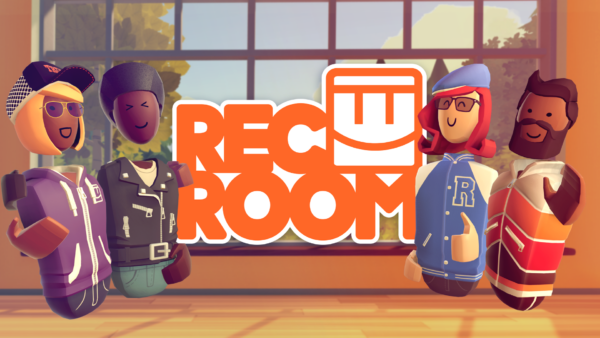
For millions of players, Rec Room was more than an app. It was a familiar meeting place: somewhere to play paintball, build a strange new world, catch up with friends or spend an evening doing almost nothing in particular. That shared virtual space is closing today, June 1, bringing an unusually personal ending to one of social VR’s most recognizable names.
The Seattle-based company scheduled the shutdown for noon Pacific time. After that, users can no longer log in, the Rec Room website will go offline, and the online services behind Rec Room Studio will cease operating. There is no announced replacement service or plan to keep existing rooms running under new ownership.
The scale makes the closure particularly striking. Rec Room says more than 150 million players and creators passed through its platform during its ten-year life. Its farewell announcement also credits the community with more than half a billion friendships and a cumulative 68,000 years spent in the game. Yet an enormous audience was not enough to keep the business open.
A virtual campus with a real community
Founded in 2016, Rec Room grew from a VR-centered social experience into a multiplatform game and creation platform. Players could visit on headsets, consoles, PCs and phones. Its approachable cartoon avatars and user-made rooms helped bring social virtual worlds to people who had never owned a VR headset.
That accessibility distinguished Rec Room from more demanding virtual-world software. Someone could start with a straightforward activity, discover an elaborate player-built adventure and end up creating a room of their own. For many young users in particular, the product became a place where friendships formed around repeated visits rather than around a single game objective.
The shutdown also illustrates a difficult feature of persistent online entertainment. A purchased single-player game can often be played years after its publisher stops selling it. A social world built around accounts, servers, networking and shared inventories is a different proposition. When the operator switches those services off, the experiences depend on infrastructure that individual players cannot easily reproduce.
Why a huge audience did not translate into a viable business
In its March announcement, Rec Room acknowledged that operating costs repeatedly exceeded revenue. The company pointed to changing conditions in the VR market and challenges across gaming, saying it could not find a sustainable path forward. It did not disclose a final revenue figure or publish an itemized explanation of the losses.
The contrast with its earlier fundraising is dramatic. GeekWire reports that Rec Room raised approximately $294 million and reached a valuation of $3.5 billion in 2021. Those figures reflected expectations for social gaming and user-generated virtual worlds during a period of unusually strong enthusiasm. Valuation, however, is not a cash reserve, and lifetime registrations are not the same as recurring paying customers.
Building a successful marketplace for creators involves more than attracting participants. Platforms must pay for hosting, moderation, engineering, payments and creator tools. They also need enough economic activity to support those expenses without making the experience unattractive to players. Rec Room’s public statement makes clear that it never resolved that equation.
What happens to rooms, tokens and creator work?
The company gave creators a wind-down schedule rather than abruptly disabling every feature. It halted new accounts and subscriptions after the announcement, set dates for ending token purchases and creator earnings, and outlined a final creator payout. Its notices also covered the end of Rec Room Plus and related programs.
For builders, the hardest part may be the distinction between exporting data and preserving a playable world. Rec Room released PC-based tools to export certain room, invention and cloud data. However, it warned that the exports are not complete, functioning copies of rooms. Rebuilding an experience elsewhere would require additional work and, potentially, different technology.
Players have options for finding new communities, but there is no universal migration path for friendships, player inventories, event histories or virtual spaces. Rival social VR platform VRChat has publicly welcomed people looking for another home. That may soften the disruption for some groups, but it does not restore what has disappeared.
Snap acquires assets, not the world
There is also a business afterlife to the story. GeekWire reported that Snap acquired selected Rec Room assets and brought some employees into Specs Inc., its augmented reality hardware subsidiary. Snap confirmed the asset deal to the publication, but neither company announced that the game itself would be revived.
The connection is understandable: expertise in multiplayer interaction, avatars and shared experiences could prove valuable for AR glasses. It would nevertheless be misleading to interpret the transaction as a rescue of Rec Room’s users or their content.
Rec Room’s final day will be remembered for the people saying goodbye inside it. The broader industry lesson is less sentimental. Social VR can produce extraordinary participation and still struggle with the economics of running an always-online world. The future of virtual communities depends not only on immersive hardware and creative tools, but also on business models capable of keeping those worlds alive.
Related coverage on Virtual Reality Times
- Discord Finally Gets an Official Meta Quest App With Voice Chat and Game Streaming
- VRChat Immersive Theatre Production Uncanny Alley Wins an Emmy
- Rec Room Working on SteamVR Body Tracking Support
- Rec Room Building Optional Full-Body Avatars
- Rec Room Has Now Amassed Over 75 Million Lifetime Users
Sources
https://virtualrealitytimes.com/2026/06/01/rec-room-shuts-down-after-a-decade-and-more-than-150-million-players/https://virtualrealitytimes.com/wp-content/uploads/2026/10/rec-room-shutdown-2026-06-01-600x338.pnghttps://virtualrealitytimes.com/wp-content/uploads/2026/10/rec-room-shutdown-2026-06-01-150x90.pngAcquistionsBusinessGamingMetaversemetaverse,Rec Room,Rec Room shutdown,social VR,virtual worlds,VR gamingFor millions of players, Rec Room was more than an app. It was a familiar meeting place: somewhere to play paintball, build a strange new world, catch up with friends or spend an evening doing almost nothing in particular. That shared virtual space is closing today, June 1, bringing...Virtual Reality Times [email protected]SubscriberVirtual Reality Times
Leave a Reply