
Sony Transfers XR Patent Rights to Meta, but PS VR2 Implications Remain Unclear
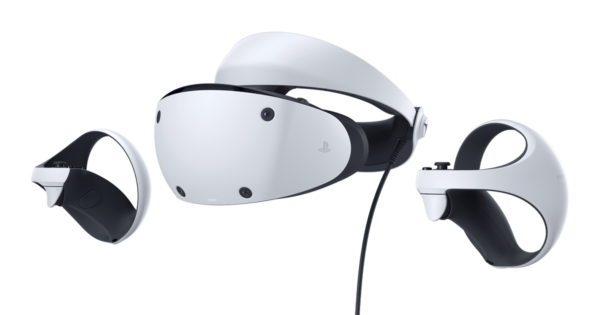
A newly reported series of patent assignments has revealed a sizable transfer of Sony-related augmented reality and virtual reality intellectual property to Meta. The records cover headset design, displays and immersive computing technologies, raising questions about what the transaction means for Sony’s future involvement in XR hardware.
The numbers are substantial. Reports published by October 7 identify 43 US patent properties recorded as transferred between June and September 2026. A wider confirmatory assignment schedule covers 419 patent and application entries worldwide, including 180 in the United States and 239 in other jurisdictions. Neither Sony nor Meta has publicly explained the commercial reasoning behind the transaction.
There is, however, an important distinction being lost in some speculation: the named seller is Sony Group Corporation, the corporate parent, rather than Sony Interactive Entertainment, the subsidiary responsible for PlayStation and PlayStation VR2. The paperwork alone does not show that PS VR2 is being discontinued or that Sony has abandoned VR gaming.
What the recorded transfers show
The story emerged from a report by ZDNet Korea and was subsequently covered by Road to VR. Records at the United States Patent and Trademark Office identify transfers involving technologies relevant to head-mounted displays, smart eyewear, image processing and other XR systems.
The patent filings originate from a broad period, with underlying inventions dating from approximately 2010 through 2022. That means the transaction is not limited to a single headset or an unpublished product. It encompasses intellectual property developed across several generations of consumer and professional display technology.
The worldwide schedule totals 419 listed items, according to a more detailed review of the USPTO paperwork by VR.org. That is not necessarily 419 unrelated inventions. A single idea may produce applications and patents in multiple countries, while related patent families can also appear more than once in assignment records.
The agreement was made effective as of December 17, 2025, while the publicly visible US recording activity occurred in stages in 2026. A confirmatory assignment serves to record ownership rights. It does not ordinarily reveal the purchase price, licensing arrangements or the business strategy behind a transaction.
Why the Sony Group name matters
Sony is a collection of businesses, and its intellectual property is not all held by the same legal entity. The parent company has worked on head-mounted displays, wearable electronics, imaging and related technologies beyond PlayStation gaming hardware.
Sony Interactive Entertainment is the business associated with PlayStation hardware, software and services. The distinction matters because a transfer of Sony Group assets does not automatically mean the same transaction includes patents owned by the gaming subsidiary.
VR.org examined the publicly recorded assignments and found Sony Group Corporation named as the seller in the relevant filings. Sony Interactive Entertainment does not appear as the transferring party. The publication also identified technical irregularities in the index entries, another reason to avoid treating a headline count as a complete inventory of independently transferred inventions.
Patent ownership can be complicated, and public records cannot answer every question about internal licensing. Even so, the documents provide a narrower conclusion than some headlines suggest: a block of XR-related patent rights changed hands from Sony’s corporate parent to Meta.
That conclusion matters on its own. It does not require a prediction that PlayStation VR2 is nearing the end of its commercial life.
What Meta might gain
Meta has invested heavily in headsets, optical systems and wearable displays. Patents covering those areas can be valuable even if a company does not intend to manufacture a product exactly as depicted in a patent drawing.
An acquired portfolio may provide freedom to develop new hardware, reduce exposure to future disputes, strengthen cross-licensing negotiations or support technologies that are still in research. Some of these outcomes could apply to Meta, but the filings do not identify which one motivated this deal.
Timing adds interest. Meta has just presented its new VR Glasses, a lightweight headset planned for spring 2027, while also broadening its AI eyewear products. Sony’s portfolio includes technologies in areas that overlap with those development priorities.
That overlap is context, not proof. It would be premature to claim that any specific Sony patent will appear in Meta VR Glasses, or that a particular optical or display feature was acquired for a named product. Meta has not made such an announcement.
Does this signal the end of PS VR2?
PS VR2 launched in 2023 and remains part of Sony’s recent history in immersive gaming. Its commercial prospects are a legitimate topic of debate, particularly as competitors pursue different prices, software strategies and hardware designs.
Nevertheless, a patent sale does not function as a product cancellation notice. Companies routinely buy, sell and license intellectual property while continuing work in related sectors. They can also discontinue products without selling their patents. The two decisions are not equivalent.
There is no public confirmation in these filings that PlayStation’s VR division has transferred its own portfolio or abandoned support for existing customers. Any assessment of future PS VR2 hardware needs direct evidence about Sony Interactive Entertainment’s plans, not merely inference from a parent-company transaction.
The scale of the assignment does suggest a deliberate portfolio decision by Sony Group. It also gives Meta rights relevant to an increasingly competitive wearable computing sector. But questions about valuation, licensing arrangements and product strategy remain unanswered.
For now, the most reliable takeaway is precise rather than dramatic: Sony Group has transferred a significant collection of XR-related patent rights to Meta, and public records establish the transaction’s broad scope. They do not establish that PlayStation VR2 is finished, or reveal what either company intends to build next.
Related coverage on Virtual Reality Times
- Meta Unveils $1,299.99 VR Glasses at Connect 2026, Shipping Spring 2027
- Meta Reality Labs Posts $4.62 Billion Quarterly Loss Despite Higher Revenue
- Sony Has Announced Four New Virtual Reality Games for PSVR 2
- PSVR 2 Sales Have Surpassed Those of the Original
- VR Skater Coming to PSVR 2 This June

Leave a Reply