
Google and Samsung Show Gemini Smart Glasses at I/O, With Audio Models Due This Fall
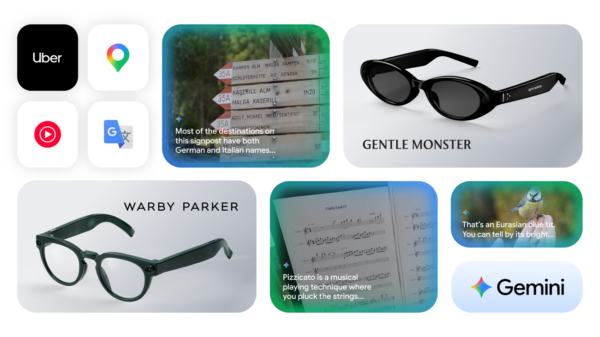
Google used its I/O developer conference on Tuesday, May 19, to give the clearest picture yet of its return to smart glasses. Working with Samsung and Qualcomm, the company showed the first two frame designs for what it calls “intelligent eyewear,” built around its Gemini assistant, and said the first models will go on sale later this fall.
The glasses come from eyewear partners Gentle Monster and Warby Parker, and Google said they will work with both Android phones and iPhones. Prices, specifications and exact release dates were not announced.
Two kinds of glasses
In a post on Google’s blog, Shahram Izadi, Google’s vice president and general manager for XR, split the plan into two product types.
Audio glasses have cameras, microphones and speakers but no display. Users talk to Gemini and hear its answers. These are launching first, “coming later this fall,” according to the post. Display glasses add a small screen in the lens for showing information when needed. Google confirmed they are coming but gave no timing.
That sequencing mirrors how the market has developed so far. Meta’s Ray-Ban glasses, which have no display, are the category’s best seller, while Meta’s more expensive Ray-Ban Display model, which pairs an in-lens screen with a wrist-worn neural band controller, is a much newer and smaller product.
What Gemini does on your face
Most of the stage time went to software. Google showed Gemini answering questions about what the wearer is looking at, from reading signs to pulling up restaurant reviews. Walking directions are given out loud based on location and the direction the wearer is facing. The glasses can read summaries of missed messages, handle calls and texts, play music, and take photos and video, which can then be edited with Google’s Nano Banana image tools.
Translation featured prominently. Google said live speech translation tries to match the original speaker’s tone and pitch, and the glasses can also translate text on menus and signs.
The most ambitious demo involved Gemini working through apps on the paired phone in the background. On stage, it placed a DoorDash coffee order and waited for the wearer to confirm before completing it. Road to VR noted that it is not yet clear how broadly that kind of app control will be available at launch, and that iPhone users may see some limits compared with Android.
The designs and partners
Google showed a black frame from Gentle Monster and a dark green frame from Warby Parker. Izadi described them as early looks at designs that will be part of each brand’s full collections later this year.
Samsung’s exact role was not spelled out in detail beyond helping build the glasses. Qualcomm, which supplies chips for most Android XR hardware, is the third platform partner. The arrangement follows the model Google used for Samsung’s Galaxy XR headset, which launched last October as the first Android XR device: Google supplies the software and AI, partners handle hardware and retail.
According to Road to VR, the eyewear announcement itself did not lean on the Android XR name, which may suggest Google intends to market these lightweight glasses separately from more immersive devices.
XREAL Project Aura and a developer program
The more immersive end of the range also got an update. XREAL said Project Aura, its wired glasses running Android XR, will launch globally this year. In a post on its own blog, XREAL lists a 70-degree field of view for Aura, much wider than typical display glasses. Like the Google and Samsung glasses, it has no announced price.
Google and XREAL also launched the Android XR Developer Catalyst Program. Selected developers will receive Project Aura developer kits along with access to the Android XR software development kit and new spatial APIs. Applications are open now, and XREAL said kits will go out “in the coming weeks.”
That matters because glasses need apps that make sense for them. Google’s approach so far has been to let existing Android apps run on Android XR hardware, but a dedicated developer push suggests it wants software designed for glasses before the consumer launches later this year.
How it stacks up against Ray-Ban Meta
Google is entering a market where Meta has a large head start. EssilorLuxottica, which makes Meta’s glasses, said earlier this year that it sold more than 7 million units in 2025. Meta also has display glasses on sale and a lineup that spans Ray-Ban and Oakley styles.
Google’s main differences, based on what it has shown, are Gemini and phone compatibility. Support for both Android and iOS puts it on equal footing with Meta, which also works across platforms, while the depth of Gemini’s integration with Android could become an advantage for users already in Google’s ecosystem.
Google has been here before. Google Glass launched more than a decade ago and struggled with price, design and privacy concerns. This time, the company is relying on established eyewear brands for the look and keeping the first models simpler, with audio before displays.
What Google has not yet said is how much any of these products will cost, which markets will get them first, or exactly when display glasses will follow. Those details will likely shape how much of a challenge the glasses pose to Meta when they arrive this fall.
Related coverage on Virtual Reality Times
- Samsung Shows New Android XR Smart Glasses Designs With Google and Eyewear Partners
- Google Says Fixing Galaxy XR Slowdowns Is “Absolute Top Priority” After Android XR Update
- Google Earth’s Maps Now Accessible to Developers
- Google’s Geospatial Creator Transforms the World into an Augmented Reality Stage
- Google Hints Samsung’s AR/VR Headset Could Be Revealed ‘Later This Year’

Leave a Reply