
Apple Upgrades Vision Pro With M5 Chip and New Dual Knit Band, Keeps $3,499 Starting Price
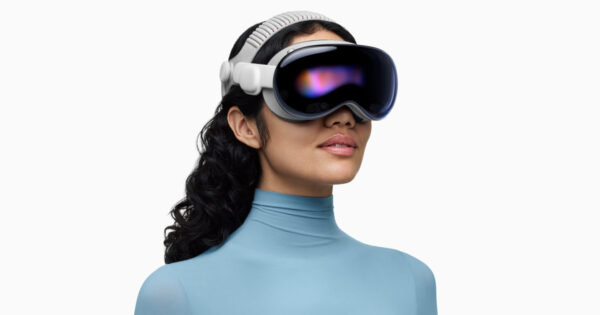
Apple has introduced a revised Vision Pro with its new M5 processor and an updated head strap designed to improve comfort. Announced October 15, the refreshed headset starts at $3,499 in the United States, with preorders opening today and retail availability scheduled for October 22.
The changes target two persistent questions around premium mixed-reality hardware: how much visual performance can fit inside a wearable device, and how comfortably can people use that device for extended periods?
Apple is not presenting this as a completely different product category. The new Vision Pro retains the same broader spatial-computing approach while upgrading processing, rendering, battery performance and the fit of the headset.
M5 brings more performance to the displays
According to Apple, the M5 chip has a 10-core CPU, a new 10-core GPU architecture and support for graphics technologies including hardware-accelerated ray tracing and mesh shading. Developers may be able to use that headroom to improve lighting, reflections and other visual details.
The company says the refreshed Vision Pro can render 10 percent more pixels on its micro-OLED displays than the original version. It can also run at up to 120Hz, potentially reducing motion blur in passthrough and making experiences such as Mac Virtual Display feel smoother.
These are incremental but relevant gains. Text clarity matters for productivity applications, and frame rate affects how natural an environment feels when users move their heads.
Apple also says M5 enables faster AI processing. Its announced improvement figures vary between system-level operations and third-party applications, so they should be interpreted as performance claims under particular conditions rather than a universal guarantee of faster software.
The headset continues to use Apple’s R1 chip for processing information from its cameras, sensors and microphones. M5 is part of a larger system, not a replacement for the tracking and passthrough hardware that makes mixed reality work.
The Dual Knit Band addresses a physical problem
Perhaps the most immediately visible change is the Dual Knit Band. The design uses connected upper and lower straps with knitted cushioning and an adjustable fit system. Apple says counterweight materials in the lower strap help improve balance and stability.
This is significant because headset comfort cannot be solved only through better processors. Weight distribution, contact pressure and the ability to adjust the device can decide whether someone uses it for ten minutes or for a long work session.
The new band is included with the refreshed Vision Pro. Apple says it can also be purchased separately for $99 and works with the original Vision Pro, which gives existing owners a possible comfort upgrade without replacing their entire headset.
Of course, a redesigned strap does not guarantee that every face shape will find the headset comfortable. In-store demonstrations and personal fitting remain useful, especially at this price.
Battery life improves, though limits remain
Apple quotes up to two and a half hours of general use and up to three hours of video playback with the new battery configuration. Users can continue using the headset while its external battery is connected to power.
Those figures provide context for where the device fits. Vision Pro can function as an expansive personal display, but untethered sessions still depend on a separate battery and its finite capacity.
For people working at a desk, access to power may make that limitation less important. On a trip or during an immersive presentation, the available operating time becomes more consequential.
Performance and battery improvements often pull against one another. Apple’s announcement suggests it has found some efficiency gains, but real usage will depend on how demanding the software is and what features remain active.
visionOS 26 and the search for useful experiences
The refreshed headset arrives with visionOS 26, including spatial widgets, changes to Personas and new ways to view immersive photography and video. Apple is also promoting a growing selection of films, sports and applications designed for spatial computing.
For productivity, the appeal is the ability to position multiple windows around a user and move among them without relying on a single physical monitor. For entertainment, the key proposition remains a large private virtual screen with immersive audio.
Apple has also highlighted support for PlayStation VR2 Sense controllers as part of its wider gaming ecosystem. That is an important signal for developers who want more expressive controls than hand tracking alone.
Still, no hardware specification can make a platform successful without applications that justify regular use. Apple’s continued investment in immersive content and developer tools will be as important as the new chip.
An upgrade rather than a mass-market reset
The starting price remains firmly premium, and Apple has not announced a low-cost Vision headset alongside this update. The revised product is likely to appeal most to customers already interested in high-end spatial computing and organizations testing professional applications.
What changes today is the performance and ownership proposition: clearer rendering, a higher refresh-rate option, longer battery claims and a band designed to distribute weight more comfortably.
With preorders open and October 22 availability approaching, buyers will soon be able to determine how much the engineering improvements matter in practice. The larger challenge for Apple remains convincing people that spatial computing deserves a consistent place in their daily routines.
Related coverage on Virtual Reality Times
- Apple Previews visionOS 26 With Spatial Widgets, Better Personas and PS VR2 Controllers
- Samsung Launches $1,799 Galaxy XR, the First Headset Built on Android XR
- Controlling the Apple Vision Pro Headset With Eyes and Hands
- Apple to Open Several Vision Pro Developer Labs in Multiple Cities To Test Headset
- Apple Vision Pro Headset Details: Specs, Release Date, Price, and More

Leave a Reply